Choosing an animation studio for a project usually comes down to a gut check: go with the big, established name, or take a chance on someone smaller. I've spent years on both sides of that decision, and I want to talk honestly about it: what big studios genuinely do better, what gets lost along the way, and why a small, artist-founded shop like CRASHOUT might be exactly what a project needs.
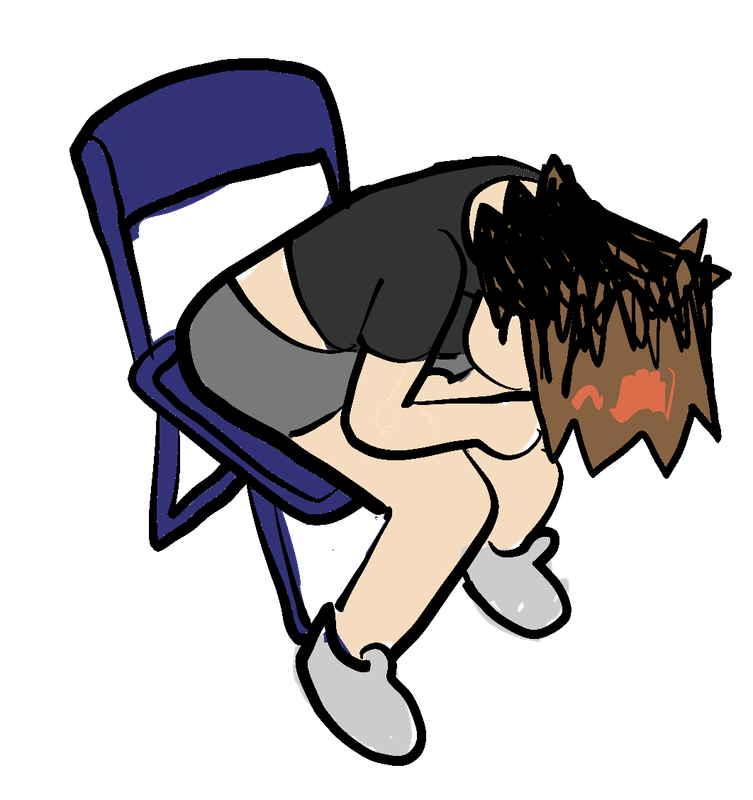
Throughout this piece, I've included some of the drawings I made while crashing out during my time in this industry — drawn while working through some of the stories I tell here. Just proof that I am an artist, and that this is something I actually lived through.
The reliability question
When a client is choosing between a big studio and a smaller one like us, I think the real concern is almost always reliability and reputation. This is an industry where relationships mean everything, and it can be daunting to pick a studio that doesn't have the referrals another one has. Look at big studios like Titmouse or Hornet, and there's a real prestige attached to those names.
What a lot of people don't realize, though, is that those places are often hiring the same talent over and over again. We're in an age right now where there are so many talented artists, whether they're just starting out or have been in the industry for years, who are out of work simply because they don't fit into one of those established niches. As an indie studio, I want us to be a space that protects the people who otherwise don't get that chance, whose work doesn't get shown in a new light. So the real reason to go with a studio like ours is access to ridiculously high-quality, untapped talent. The ceiling for us is huge. There are so many people out there who would love the chance to work with a new company.
What big studios do better, and what we do better
A big studio is always going to have better connections for distribution and reach. But that doesn't always translate to quality, and it definitely doesn't guarantee an immediate breakout success. Every studio right now is dealing with a tumultuous, algorithm-driven landscape where almost anything can make or break a project.
What we bring is an indie spirit. We care more, and we put more time and effort into getting a project out through the right channels. Because we're lean, we have the flexibility to try again. If something isn't working, we're not locked into the same people or the same avenues, we're constantly improving how we do things. Bigger studios tend to be set in their ways, which leaves a lot less room for that kind of growth.
Why in-house work matters to us
At previous studios, I'd get a creative brief and end up acting mostly as the middleman. We'd take the deliverable, maybe build an internal production schedule, and then hand it off to a vendor studio that would handle everything else, down to a lot of the creative direction. The problem was on our end too: the team managing that relationship was made up of producers, and none of them had a background in art. So the feedback we sent back to the vendor was based on vibes and technical notes rather than anything genuinely artistic, and things got lost in translation on both sides. The artists' voices, on our team and theirs, got drowned out.
That's exactly what I wanted to fix at CRASHOUT. I want our artists to feel enabled to speak up at any level, to see any part of the process. We're an open-book studio. If an artist wants visibility into something or wants to leave feedback, all they have to do is ask. We want to hear directly from the people actually making the art, because they're the ones shaping what real creativity looks like. Why would we want to drown those people out?
I saw exactly what gets lost when nobody owns the whole thing while working on a major Nickelodeon property. We brought in a vendor studio to handle the animation, and it quickly became clear that the vendor didn't understand the animation style we needed, and neither did the producers overseeing it on our side. Because those producers wanted to stay hands-off from the actual animation, even when they tried to push back on things, nothing really changed. Nobody was in the room with the artists, so there was no way to close that gap. That experience is a big part of why I think it's so important to be in direct control of the creative work you're responsible for, and to let your artists own and contribute to it too. There's no way to know what an artist is capable of delivering if you don't actually know the artist.
Learning to fight for the vision
Creative control matters to me personally because I lived without it for a long time. I'd get a brief and be told I was creatively producing or directing something, only to find that everything had already been decided for me: the character designer, the background artist, the voice actors, sometimes even on projects where I was supposedly building it from scratch. A producer would make those calls, not me. As an artist, that felt strange. I know not every studio operates that way, but in short-form work especially, it happens a lot, partly because of time constraints, and partly because a lot of producers don't come from an animation background and don't fully understand what it means to lead creatively.
That frustration is a big part of why I started CRASHOUT. I couldn't fully realize the vision I had for a project no matter how much I pushed back or how many revised briefs I wrote. It never felt like enough. On top of that, even when I did have creative control, I often didn't have the resources or mentorship to back it up, which is part of why we're so involved with organizations like the Children's Media Association, Women in Animation, and the others we partner with. We're ambassadors, volunteers, and active members, not just names on a list. Being able to tap a mentor who knows more than you is genuinely valuable.
On one preschool-focused project I produced, none of the producers actually knew the rules and standards that go into preschool programming. Even the writers were picked without much research into what that age group actually needs. Obviously, no shame to everyone on that project! It really came down to time — everyone wanted to care, but nobody had built in the time to do the research properly. That's something I take seriously now: building in real time to be thoughtful about what we're making, and bringing in actual experts instead of winging it.
When you should go big instead
I'll be honest about where a small studio isn't the right fit. It comes down to scale and fidelity. If you're making a feature-length film with Richard Williams-level, ultra-high-fidelity animation, I'd tell you to go to a bigger shop and get the recognition that comes with it. Outside of that, it really depends on strategy, and I think strategy is something every client should think hard about in this industry.
If your project is meant to be the next Avatar, the smartest move is to go straight to Avatar Studios, straight to the people who are the actual experts on that specific thing. That doesn't mean a smaller studio couldn't do it, but if your inspiration and creative love point to a specific source, go to that source. Give it that respect.
The case for the little guy
If you're on the fence, here's what I want you to know: we're just as talented, just as capable, and hungrier than the big guys. We have drive and talent behind us that's completely untapped, talent that's been turned away elsewhere simply because it didn't fit a certain mold. Come to us if you want to build something with real meaning, something an artist actually cared about, something you want to see made no matter what. Because the little guy will always find a way to make it happen. The big guy might just say no.
Got a project you want to bring to life the right way? Let's talk about it.